
To detect an underground water leak, shut off every fixture, read your water meter, wait fifteen minutes without using water and read it again. If the numbers changed, or the leak indicator moves, water is escaping somewhere. Then close the main valve at the house and check the meter again to learn whether the leak is before or after the valve.
A plumber confirms the spot with acoustic and pressure tools, so the dig is small. In Highland, call if the meter is still moving after you close the main.
Signs of an Underground Leak
Underground leaks show up indirectly. These clues are the ones to watch.
- A soggy or sunken patch in the yardWater is reaching the surface.
- A strip of greener grassA leak is feeding the roots above the line.
- Low pressure at every tapThe line is losing water before the house.
- A higher bill with no change in habitsA constant leak adds up.
- The meter moves with all fixtures offWater is leaving your system.
- The sound of running water near the meterA break close to the connection.
The Two Minute Meter Test
This test tells you whether a leak exists and which side of the shutoff it is on.
Turn off all water use
Stop the dishwasher, the washer and the irrigation timer.
Read the meter
Note the numbers and the low-flow dial.
Wait fifteen minutes
Do not run any water.
Read again
A change means a leak.
Close the main at the house
If the meter keeps moving, the leak is between the meter and the valve.
Meter Still Moving?
Call (909) 505-3225 and a plumber can test the line and mark the leak.
Call (909) 505-3225What a Plumber Uses That You Cannot
Pressure testing
We isolate the line and see whether it holds pressure. A drop confirms a leak and helps narrow it down.
Acoustic listening
Water escaping a pressurized pipe makes a sound. Sensitive microphones on the ground find the loudest point.
Thermal and gas methods
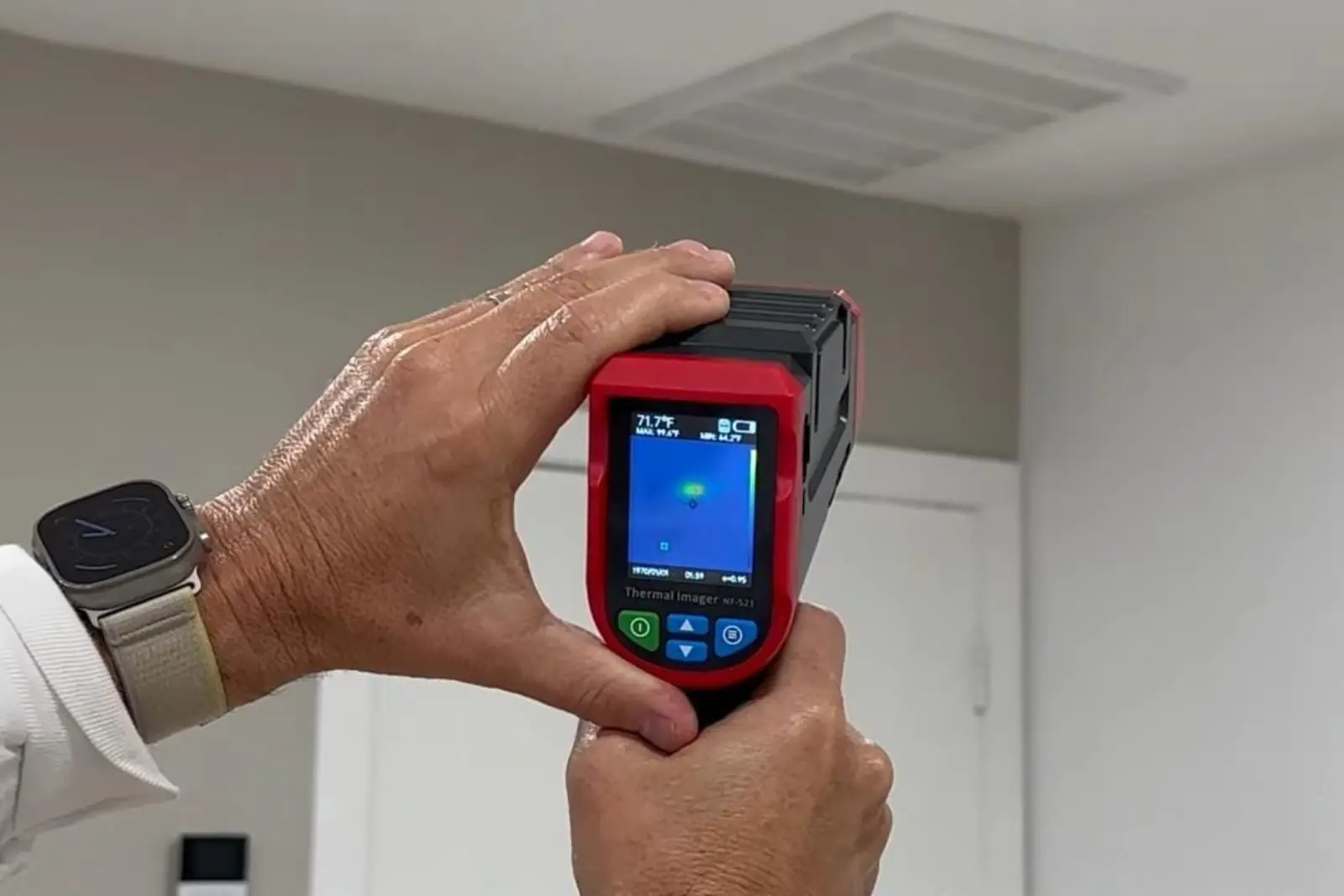
Thermal imaging shows warm or cool spots from leaking water. Tracer gas finds small leaks acoustic tools miss. See leak detection for the full list.
Utilities and Digging Rules in Highland
East Valley Water District supplies water to Highland, and the line from the meter to your house is generally the owner's responsibility. Check your bill for the water provider before you call the utility about a leak at the meter.
Call 811 before any digging so buried lines are marked. The City of Highland permit exceptions page lists what repairs do and do not need a permit, so ask Building and Safety before replacing a buried line. If you suspect the leak is under the house, see slab leak repair.
According to California's underground service alert law, buried utilities must be located before digging, and calling 811 connects you to the regional center that marks them.
What Different Clues Usually Mean
The same symptom can have more than one cause, so use this as a starting point and not a diagnosis.
| Clue | Possible cause | First step |
|---|---|---|
| Wet patch near the meter | Meter connection or service line | Photograph it and call a plumber. |
| Wet patch near the house wall | Hose bib or supply line at the foundation | Close the main and watch the patch. |
| Green strip across the lawn | Irrigation or service line | Shut off irrigation and retest the meter. |
| Low pressure only at the hot tap | Water heater or hot line leak | Check the heater and the lines near it. |
| Warm floor spot | Hot line under a slab | Call a plumber, see slab leak repair. |
A plumber can sort these out with pressure testing, so you do not dig in the wrong place.
Why Waiting Costs More
A leak that runs unseen wastes water every day and can undermine soil under a driveway or slab. Water also finds the path of least resistance, so the wet spot at the surface may be far from the break.
The meter test takes a few minutes and the answer is clear. A plumber with the right tools usually finds the spot within a visit, and a small, planned dig costs far less than a wide guess.
Leaks That Look Like Something Else
Irrigation valves stuck partly open can mimic a service line leak, because both show up as a soft lawn and a moving meter. A running toilet can look like a high bill from a leak. A pool auto fill valve can add water that you never see used.
Rule these out before you call. Shut off irrigation at its own valve, check each toilet with a drop of food coloring in the tank and, if you have a pool, look at the auto fill. If the meter still moves after those checks, the problem is in a buried line.
What To Do Once You Find It
Shut off the main water valve if water is surfacing. Photograph the wet area and the meter reading for your records. Then call a plumber. Do not dig around buried lines without marking utilities first.
Repair options depend on the pipe and the location. See water line repair for how we replace a service line, and this site covers Redlands and Mentone as well as Highland.
Frequently Asked Questions
Close the main at the house. If the meter stops, the leak is inside. If it keeps moving, the leak is outside, before the valve.
Not always. A running toilet or irrigation can cause it. A meter test sorts these out.
Yes. It is required so underground utilities are marked.
Yes. Turn off the irrigation supply and retest the meter.
Do the meter test. If water is still moving after the main is closed, call right away.