
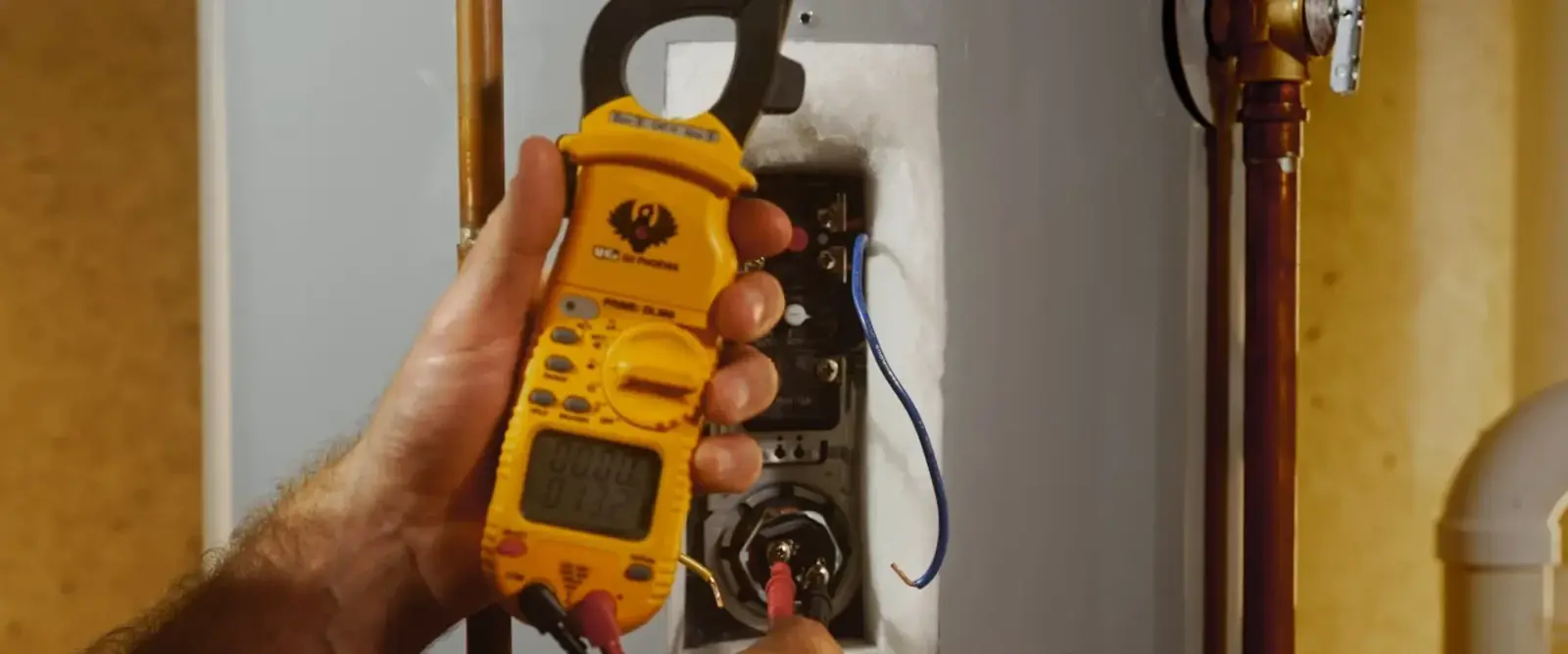
A water heater pressure valve, formally the temperature and pressure relief valve, opens when the tank gets too hot or too high in pressure. If it drips, leaks or has not been tested in years, replace it, because a stuck valve can fail at the moment it is needed. The job is a plumber's task for most homes since it involves draining the tank.
If the valve is spraying hot water, shut off the gas or power to the heater and the cold water supply, then call us. Call to ask about timing.
What the Valve Does
The relief valve protects the tank. If thermostat controls fail or pressure builds from thermal expansion, the valve opens and sends water down a discharge pipe. Without it, a tank can rupture.
A valve that drips occasionally may be reacting to pressure. A valve that drips steadily, or whose lever is stiff, is worn or caked with mineral scale and should be replaced.
Signs You Need a New Valve
These signs call for a plumber.
- A steady drip from the discharge pipeThe valve seat is worn or scaled.
- A stiff or stuck test leverMineral buildup blocks the valve.
- Corrosion at the valve bodyThe brass is failing.
- A valve that has never been testedRelief valves wear in place.
- Hot water spitting from the pipePressure or temperature is too high.
Valve Leaking?
Call (909) 505-3225 and ask about help to replace the valve and check the heater.
Call (909) 505-3225How a Plumber Replaces It
The sequence protects both the heater and the home.
Shut off fuel and water
Gas or power goes off, and the cold supply is closed.
Relieve pressure and drain
Water is drained below the valve level.
Remove the old valve
The valve and the discharge pipe connection are taken out.
Install the new valve
The correct pressure and temperature rating is matched to the tank.
Check the discharge pipe
The pipe must run downward and end in a safe spot.
Refill and test
We check for leaks and confirm normal operation.
Why a Valve Drips and What Fixes It
A drip is a symptom, and the cause matters.
| Cause | What you see | Fix |
|---|---|---|
| Worn valve seat | Steady drip | Replace the valve. |
| Thermal expansion | Drip after each heating cycle | Add an expansion tank. |
| High incoming pressure | Drip all day | Install or adjust a pressure regulator. |
| Overheating thermostat | Hot, spitting discharge | Replace the thermostat and valve. |
What Highland Building Guidance Says
The City of Highland published a Water Heater Installation Bulletin in April 2017 that lists the discharge requirements for heaters. It lists the temperature and pressure relief drain, seismic strapping, a drain pan, an 18 inch elevation for ignition sources in garages, combustion air and venting among the installation items. The bulletin does not address permits, so ask Building and Safety, located at 27215 Baseline, if you are unsure.
East Valley Water District reports average hardness of 152 mg/L in 2026. Scale can coat the valve seat and make it stick, which is one more reason to flush the tank. See water heater repair for what we check.
Relief valves are covered by the plumbing code, which is based on the Uniform Plumbing Code (UPC), and the valve must match the tank's rating according to the heater's manufacturer.
How to Test the Valve Safely
Place a bucket under the discharge pipe, then lift the test lever for a second or two. Hot water should flow and stop when you release the lever. Hot water can scald, so stand to the side and keep children away.
If nothing flows, or if the valve keeps dripping after you release it, the valve is stuck or worn. Do not cap the pipe. A capped discharge defeats the safety purpose, so call a plumber.
Safety Rules for the Discharge Pipe
The pipe is part of the safety system, so keep it correct.
- It should run downwardWater must drain by gravity and not sit in the pipe.
- It should end at a visible, safe spotSo a discharge is noticed and does not scald anyone.
- It should not be capped, plugged or reducedA blocked pipe can prevent the valve from relieving.
- It should be the right materialHeat rated pipe is required, not thin plastic.
What a Replacement Visit Costs You in Time
Most relief valve replacements take about an hour, plus the time to drain and refill the tank. Water is off to the heater during the work, but the rest of the house can keep running.
If the valve is leaking because of high household pressure, the visit may include a pressure test and a regulator check. That adds a few minutes and prevents the new valve from wearing out quickly.
What to do if the valve is spraying
A spraying valve means high heat or pressure.
- Stay clear of the dischargeThe water can scald.
- Turn off the gas or powerAt the control or the breaker.
- Close the cold water supplyThe valve is above the tank.
- Do not cap the pipeA capped discharge defeats the safety valve.
- Call a plumberOverheating needs a diagnosis, not only a new valve.
When Replacing the Heater Makes More Sense
If the tank is old and the valve is only one of several problems, replacement may cost less than repeated repairs. A heater that is leaking from the tank itself cannot be repaired.
See water heater replacement for the options. We serve San Bernardino and Redlands as well as Highland.
Frequently Asked Questions
Manufacturers commonly suggest testing yearly. Lift the lever briefly and make sure water flows and stops.
It can be a sign of high pressure or temperature. Do not cap the valve. Call a plumber.
It involves draining the tank and working with fuel or power, so most homeowners hire a plumber.
The April 2017 bulletin lists the temperature and pressure relief drain among the installation items, so keep it piped to a safe place.
Yes. See Mentone.