
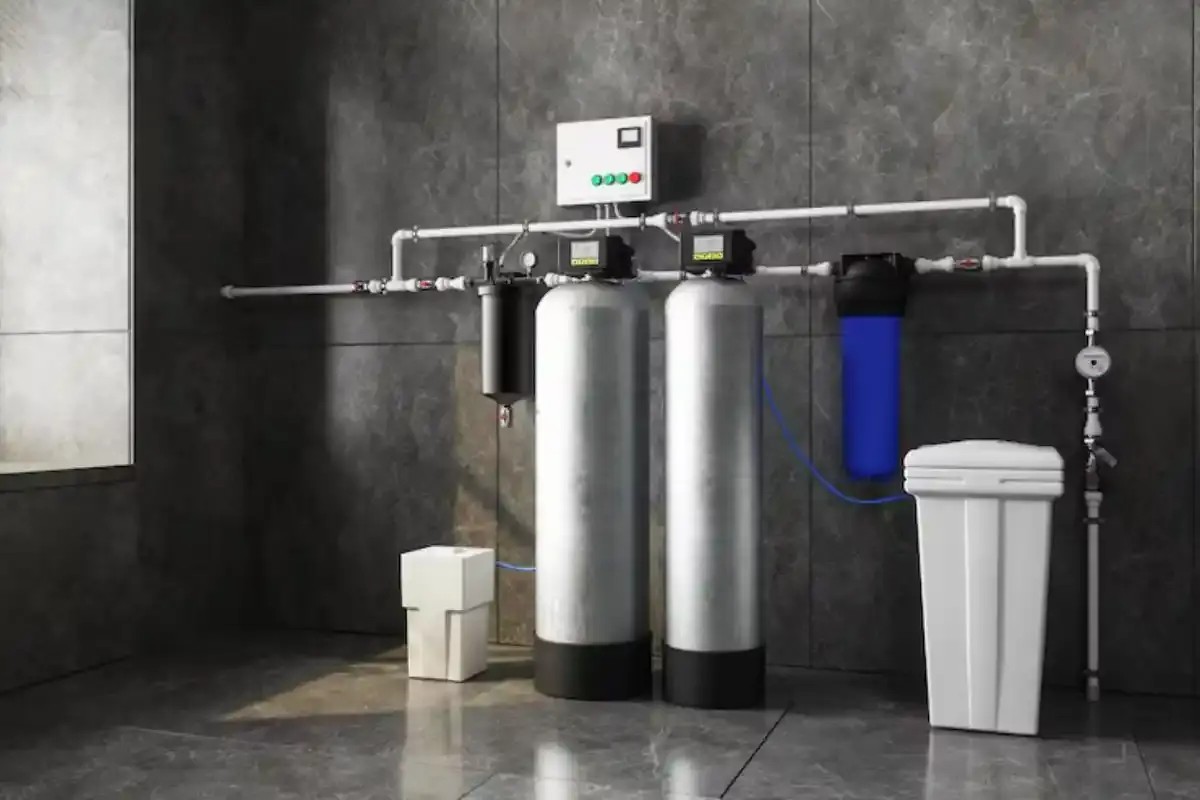
The cost of installing a water softener depends on the unit size, the type of system, the plumbing layout and the labor to connect it to a drain and power. A basic salt-based softener costs less than a larger or dual-tank model, and a garage with a drain nearby costs less than a tight closet. We give a written price after seeing the site.
In Highland the water is hard enough to justify a look. East Valley Water District reports average hardness of 152 mg/L, which is about 8.9 grains per gallon.
What You Pay For
A softener quote has two parts: the equipment and the installation. Equipment price follows capacity and features. Installation covers the bypass valve, the drain connection, the brine line, the electrical outlet and testing.
Ask what is included. A low equipment price can hide extra fees for the drain, the electrical work or removing an old unit.
Factors That Set the Price
These are the items that move a quote.
Call (909) 505-3225 for a written price on your home.
Ready for Softer Water?
Call (909) 505-3225 and a plumber can test your water and size the system.
Call (909) 505-3225Salt Softener or Salt Free Conditioner
They treat hardness in different ways.
| Type | How it works | Result |
|---|---|---|
| Salt-based softener | Ion exchange removes calcium and magnesium | Truly soft water. |
| Salt free conditioner | Changes how minerals form scale | Less scale, water remains hard. |
| Carbon filter | Removes taste and odor | Does not treat hardness. |
A salt-based unit is the one that removes hardness. A conditioner reduces scale but does not soften.
Highland Water Numbers
East Valley Water District's 2026 Consumer Confidence Report lists average hardness at 152 mg/L. By a standard conversion of 17.1 mg/L per grain, that is about 8.9 grains per gallon. Check the district's report for your own area and test your tap for a current reading before you size a unit.
Ask the district or the City of Highland about rules that apply to softener discharge in your area, and ask Building and Safety if a permit is needed for the connection. See water softener and filtration for our service.
Softener installation follows the plumbing code, which is based on the UPC, including the air gap on the drain, and the unit's maker publishes the capacity standards used for sizing.
What an Installation Visit Includes
The visit follows a set order.
Test the water
Hardness and iron readings guide sizing.
Choose the location
Near the main, a drain and an outlet.
Plumb the unit
Bypass valve, inlet and outlet connections.
Connect the drain and brine line
The drain must meet the air gap rule.
Program and start
Regeneration is set and the unit is tested.
Ongoing Costs to Plan For
A salt-based softener uses salt, water for regeneration and a little power. A typical household adds salt every few weeks. Resin lasts many years, but it wears faster with iron in the water.
Ask how often service is recommended and what a valve rebuild costs. Compare the total cost of ownership and not only the first price.
Rental, Purchase and Used Units
Some companies rent softeners with a monthly fee. A purchased unit costs more upfront but has no monthly fee. A used unit is risky because the resin may be worn.
Ask for the warranty terms in writing, and who handles service. If you rent your home, ask your landlord before you change the plumbing.
Reading a Softener Quote
A clear quote lists the unit model and capacity, the install labor, any plumbing parts, the drain connection and the warranty. A vague quote with one number leaves you guessing what is included.
Ask what happens if the site needs extra work, such as a new outlet or a longer drain run. A good contractor tells you the options before the work, not after.
Salt, Water Use and the Environment
A softener flushes brine to a drain when it regenerates. Some communities restrict that discharge, and some choose potassium instead of salt. Ask the water district or the City of Highland about any rules in your area before you buy.
Efficient demand controlled units regenerate only when needed. They use less salt and water than timer units, and they cost a little more up front.
Who Should Skip a Softener
If your household is on a low sodium diet, ask your doctor about drinking softened water. A tap with unsoftened water or a reverse osmosis unit can supply drinking water. If you rent, a portable unit may suit you better than a permanent install.
If you plan to move soon, factor in the time you will use the unit. A softener adds comfort and protects fixtures, but the payback takes years.
What Hard Water Costs You
Hard water leaves scale in a water heater, which makes it less efficient and shortens its life. It also spots glass and builds crust on fixtures. A softener costs money upfront, and the savings come from fewer repairs and longer fixture life.
If scale has already damaged your heater, see water heater replacement. We serve Redlands and San Bernardino as well as Highland.
Frequently Asked Questions
East Valley Water District's 2026 report lists average hardness at 152 mg/L, about 8.9 grains per gallon.
Salt must be added, and the brine tank needs cleaning yearly.
Yes, often. It needs a drain, an outlet and room for the tank.
Ask Building and Safety. We explain what applies to your job.
We serve Mentone as well.